Click here
Lorem Ipsum is simply dumy text of the printing typesetting industry lorem ipsum.
Schedule Call

The Ultimate On-Page SEO Checklist for Beginners in 2026

If you are trying to grow your website in 2026, learning On-Page SEO is honestly one of the smartest places to start. It is not just about ranking on Google anymore. Good SEO helps people actually find your content, stay on your website longer, and trust your business a little faster.

A lot of beginners think SEO is too technical or something only big agencies handle. But that is not really true. Once you understand the basics, most of it comes down to creating useful pages, organizing content properly, and making your website easier for both users and search engines to understand.

This guide walks you through a practical beginner SEO checklist, simple on-page SEO techniques, and the real importance of SEO in today’s competitive online space. You will also understand the biggest SEO benefits for new businesses and why small improvements can make a surprisingly big difference over time.

Why On-Page SEO Matters More Than Ever?

The internet is crowded now. Every business, blog, and brand is fighting for attention. So when your website is not optimized properly, it becomes very difficult for Google to understand what your page is actually about. That is where On-Page SEO helps.

It tells search engines:

  • what your content covers
  • which keywords matter
  • how your page is structured
  • whether users are having a good experience

And honestly, Google has become much smarter in 2026. It no longer rewards pages just because they repeat keywords twenty times. Search engines now look at content quality, page experience, relevance, and trust signals. So yes, SEO today feels a little more human.

Better Visibility Without Paying for Ads

One of the biggest reasons people invest time into SEO is because organic traffic keeps coming even when you are not running ads.

Think about it. A properly optimized blog post can bring visitors for months or even years. That is a huge advantage for startups or smaller businesses trying to grow on limited budgets.

Some major SEO benefits for new businesses include:

  • lower marketing costs
  • long-term traffic growth
  • improved credibility
  • more qualified leads
  • stronger online presence

Paid ads stop the moment your budget runs out. SEO does not work like that.

SEO Also Improves User Experience

A lot of people forget this part. Good SEO is not only for Google bots. It actually improves the experience for real users too. And that matters because if visitors leave your website immediately, rankings usually drop over time.

A properly optimized page feels easier to use. It loads faster. The headings make sense. The content flows naturally. Users do not feel lost while reading.

Small things like:

  • mobile-friendly layouts
  • readable text
  • faster loading speed
  • organized headings
  • internal links

all contribute to better engagement. And honestly, Google notices that stuff.

Beginner SEO Checklist You Should Actually Follow

When people start learning SEO, they often jump straight into advanced strategies and end up overwhelmed. That usually leads to confusion, random optimization, and sometimes even harmful SEO practices. The better approach is simpler. Start with the fundamentals first.

Start With Keyword Research

Before writing anything, you need to know what people are searching for. That sounds obvious, but beginners skip this all the time.

Keyword research helps you understand:

  • what users want
  • how they search
  • which phrases have traffic potential
  • what type of content ranks already

For example, someone searching for “SEO basics for beginners” probably wants clear and simple explanations. They are not looking for highly technical audits or coding tutorials.

That context matters a lot. When choosing keywords:

  • focus on search intent
  • target realistic phrases
  • avoid extremely competitive terms initially
  • use long-tail keywords naturally

And please do not stuff keywords everywhere. That strategy stopped working years ago.

Optimize Titles and Meta Descriptions Properly

Your title is usually the first thing users see on Google. If it looks boring or unclear, people simply will not click.

A strong SEO title should:

  • include the main keyword
  • feel natural
  • explain the topic clearly
  • create curiosity without sounding clickbait-y

For example:

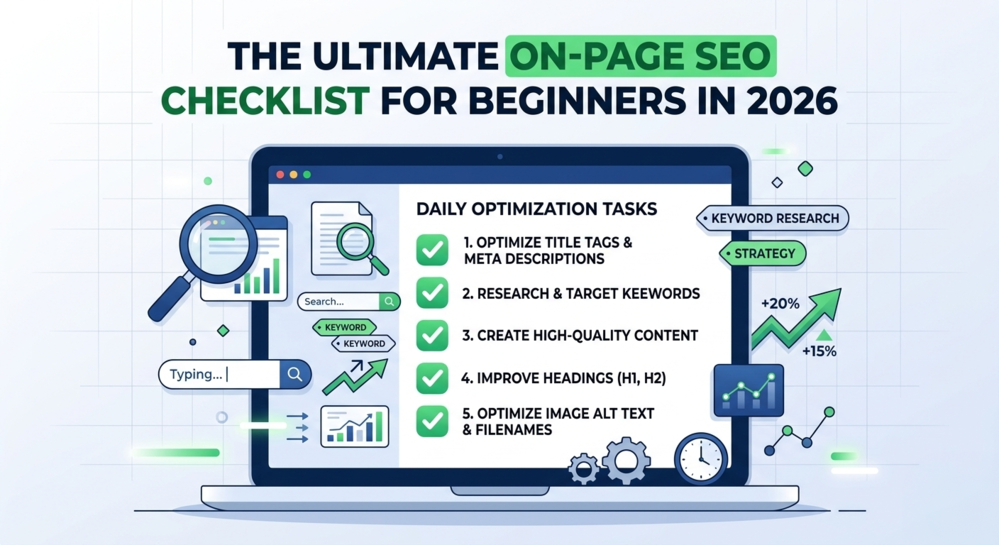
The Ultimate On-Page SEO Checklist for Beginners in 2026

Simple. Clear. Direct. Meta descriptions matter too, even though many beginners ignore them. They help improve click-through rates because users read them before deciding which result to open.

Tiny details like this may seem small individually, but together they improve overall SEO performance.

Use Headings That Feel Organized

One thing search engines love is structure. And honestly, users love it too. Nobody wants to read one giant wall of text with no breaks. Your page should ideally include:

  • one H1 heading
  • multiple H2 headings
  • supporting H3 headings where necessary

This helps search engines understand the hierarchy of your content. But more importantly, it helps readers scan information faster. That is why proper headings remain one of the easiest yet most effective on-page SEO techniques beginners can implement immediately.

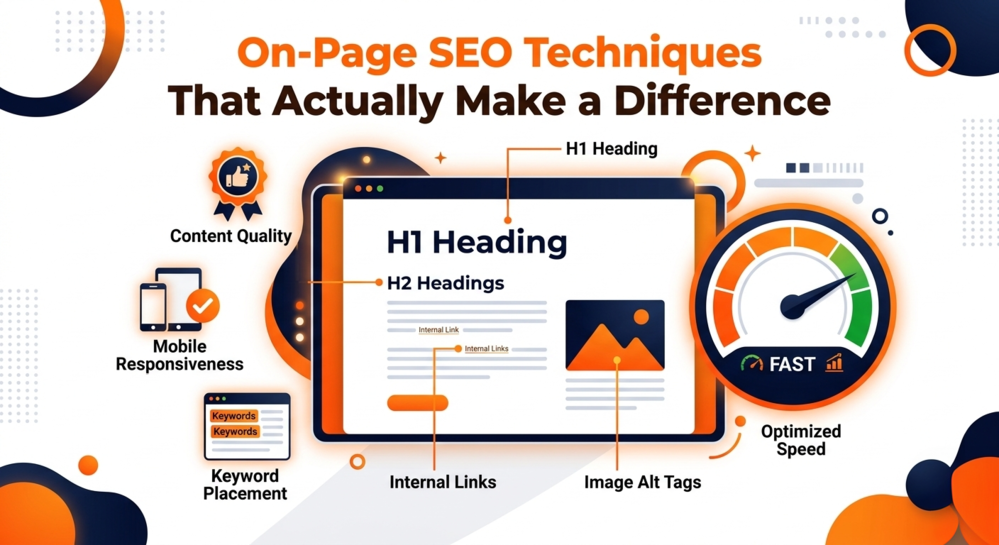
On-Page SEO Techniques That Actually Make a Difference

There are hundreds of SEO tips online. Some are useful. Some outdated. Some honestly just noise. But a few strategies consistently matter because they improve both rankings and user experience together.
Write Helpful Content First

This sounds basic, but it is still the most important part. Google now prioritizes content that demonstrates:

  • expertise
  • experience
  • trustworthiness
  • relevance

In other words, shallow content does not perform well anymore. If your article only repeats information already available everywhere else, rankings become difficult.

Good content answers questions properly. It explains things clearly. It feels written by someone who actually understands the topic.

That is why many experienced agencies, including AdliveTech, focus heavily on content quality and user intent rather than outdated keyword-heavy tactics. Because honestly, search engines have evolved a lot.

Improve Internal Linking

Internal links are underrated. Most beginners publish articles and never connect them properly with related pages. That creates isolated content which search engines struggle to understand contextually.

Internal linking helps:

  • distribute authority across pages
  • improve navigation
  • increase engagement time
  • help Google crawl pages better

For example, if you write about technical SEO later, linking it back to your beginner SEO guide creates stronger topical relevance. It sounds small but it matters more than people think.

Optimize Images and Speed

People love visual content, but oversized images can slow your website down badly. And slow websites frustrate users fast.

To improve performance:

  • compress images
  • use descriptive filenames
  • add alt text
  • avoid unnecessarily large files
  • use modern image formats

Page speed is now a direct ranking factor, especially on mobile devices. A slow site usually means:

  • higher bounce rates
  • lower engagement
  • weaker rankings

So yes, image optimization absolutely matters.

Importance of SEO for Long-Term Business Growth

The importance of SEO keeps growing because online competition grows every single year. Businesses that ignore SEO eventually struggle with visibility, even when their products or services are genuinely good. Instead of depending fully on paid advertisements, SEO helps businesses build sustainable, long-term traffic that compounds over time.

SEO Builds Trust Slowly But Powerfully

People naturally trust websites they see repeatedly on Google. It creates familiarity. Over time, strong rankings help position your business as reliable, established, knowledgeable, and trustworthy. This matters especially for new brands trying to compete in crowded industries. Trust builds gradually when your content consistently solves real problems for users.

Mobile Optimization Is No Longer Optional

Most searches now happen on smartphones. If your website looks broken or slow on mobile, your rankings will suffer. A good mobile experience includes fast loading speed, readable fonts, simple navigation, responsive design, and easy-to-click buttons. Google uses mobile-first indexing, meaning mobile performance directly impacts your SEO visibility, something many beginners still underestimate.

SEO Gives Long-Term ROI

This is one of the biggest reasons businesses keep investing in SEO. Unlike paid advertising that stops the moment your budget runs out, SEO keeps working over time. Once your pages rank, traffic becomes more consistent, lead generation improves, customer acquisition costs decrease, and brand visibility grows steadily. That long-term consistency is one of the strongest SEO benefits for new businesses looking to grow sustainably without burning through ad spend.

Common On-Page SEO Mistakes Beginners Still Make

Most on-page SEO mistakes happen because beginners focus on shortcuts instead of fundamentals. Some of the most common include:

  • copying content from competitors
  • ignoring mobile optimization completely
  • publishing thin articles with no real value
  • using poor or missing heading structure
  • forgetting internal links between related pages
  • neglecting page speed and core web vitals

Modern SEO rewards quality and usability far more than tricks. Focus on creating genuinely helpful content, structuring it clearly, and optimizing every page properly. That is where the real importance of SEO lies, and why it remains one of the most valuable long-term investments, especially as a core SEO benefit for new businesses building their digital presence from the ground up.

Final Thoughts

Learning On-Page SEO can feel overwhelming at first, especially with how much conflicting advice exists online. But once you focus on the fundamentals, things start making more sense.

A strong beginner SEO checklist, combined with practical on-page SEO techniques, can gradually improve rankings, traffic, and overall website performance without needing complicated strategies.

The real importance of SEO is not just about ranking higher. It is about helping the right people discover your content at the right time.

And for growing brands, the long-term SEO benefits for new businesses are honestly hard to ignore. Better visibility, stronger credibility, consistent traffic, and lower dependency on paid ads,  all of that adds up over time. Start small. Optimize consistently. Focus on users first. That is usually where the best SEO results come from anyway.

Frequently Asked Questions

What is On-Page SEO?

On-Page SEO refers to optimizing individual pages on your website to improve search rankings and user experience. This includes content, keywords, headings, page speed, images, and internal linking.

Why is SEO important for beginners?

SEO helps beginners improve online visibility and attract organic traffic without relying entirely on paid ads. It also helps build trust and long-term website growth.

Which on-page SEO techniques work best in 2026?

Some of the most effective on-page SEO techniques include keyword optimization, mobile-friendly design, fast-loading pages, quality content, internal linking, and proper heading structure.

How long does SEO take to show results?

SEO usually takes a few weeks to several months depending on competition, content quality, and consistency. It is more of a long-term strategy than a quick fix.

What are the SEO benefits for new businesses?

The biggest SEO benefits for new businesses include better online visibility, steady organic traffic, stronger credibility, lower advertising costs, and long-term digital growth.
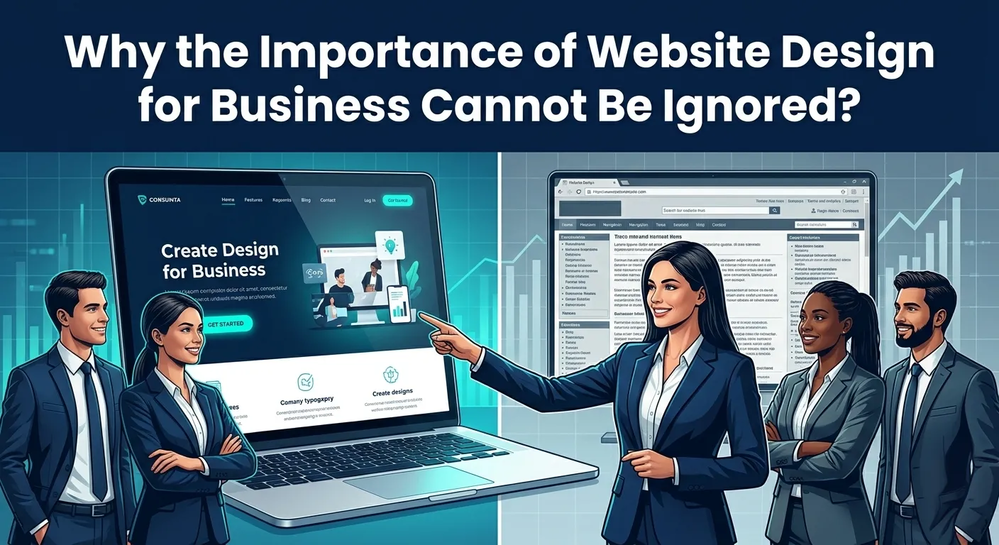
Why the Importance of Website Design for Business Cannot Be Ignored?

Your website is the single most powerful asset your business owns online, and its design determines whether visitors trust you, stay, or leave within seconds. The importance of website design for business goes far beyond how things look; it directly shapes customer perception, drives conversions, and defines your brand credibility at every digital touchpoint. If your website is not working hard for your business, it is actively working against it.

How Website Design Affects Customers and Their Buying Decisions?

First impressions online happen in milliseconds. Research consistently shows that users form an opinion about a website within 0.05 seconds of landing on it, and that judgment directly influences whether they stay, explore, or bounce. A cluttered, outdated, or confusing design sends one clear message to your potential customer: this business cannot be trusted.

When a visitor lands on your website, they are subconsciously evaluating your professionalism, your attention to detail, and your understanding of their needs. A visually appealing layout with clear navigation communicates that you take your business seriously. Contrast that with a site that has broken links, inconsistent fonts, and no clear call to action, that customer will click away and hand their money to your competitor in seconds.

Beyond aesthetics, website design directly affects how your customers feel. Colors, typography, white space, and imagery work together to create an emotional atmosphere. A law firm’s site needs to feel authoritative and calm. A children’s brand needs to feel playful and safe. When design aligns with your audience’s psychology, customers feel understood, and that emotional resonance is precisely what turns casual browsers into paying buyers. Teams like Adlivetech, with over a decade of hands-on experience building conversion focused websites, understand this psychological alignment and engineer it deliberately into every project they take on.

The Role of Visual Hierarchy in Guiding Customer Attention

Visual hierarchy is the strategic arrangement of design elements that guides your visitor’s eye toward what matters most, your value proposition, your key service, your call to action. Without it, visitors feel disoriented and uncertain about what to do next, and an uncertain visitor is a lost customer.

Effective visual hierarchy uses size, contrast, color, and spacing to prioritize information. Your most important message should be the very first thing a visitor registers. Supporting information follows naturally. Your call to action is always positioned where the eye lands after processing the core message. When this intentional flow is disrupted or missing, your conversion rate drops sharply, regardless of how good your actual product or service is.

Trust Signals That Your Website Design Must Communicate

Before any visitor makes a decision, whether that is filling out your contact form, making a purchase, or simply spending five more minutes on your site, they are actively scanning for trust signals. These include a professional logo, consistent brand colors, readable typography, SSL security indicators, and real client testimonials with authentic names and context.

A poorly designed website undermines every trust signal you attempt to place on it. Even a genuine five star review looks suspicious when it sits on a page that looks unreliable or unprofessional. Design is the frame around your credibility, and a broken frame damages the content inside it. If you are serious about building customer confidence online, your website design is where that work begins.

Website Design and User Experience: The Foundation of Online Success

User experience, commonly called UX, refers to how a person feels when interacting with your website: how effortlessly they find information, how fast pages respond, how logical the navigation flow is, and how satisfying the overall journey feels. The importance of website design for business is perhaps nowhere more measurable than in UX, because poor user experience directly kills conversions in ways that show up in your analytics and your revenue.

Great UX design begins with a deep understanding of your target audience. What are they actually looking for? What questions need to be answered before they feel ready to act? What frustrations do they carry from poor experiences on other websites? When your design answers those questions before the visitor even consciously formulates them, the experience feels effortless and natural. That seamless quality is what builds repeat visits, referrals, and long term customer loyalty.

Mobile responsiveness is no longer optional, it is a baseline expectation. With more than 60% of global web traffic now arriving from mobile devices, a website that renders beautifully on a desktop but breaks on a phone is a direct business liability. Responsive design ensures that your website adapts perfectly to every screen size, preserving usability, readability, and visual quality whether your customer is on a widescreen monitor or an older smartphone in poor lighting. At Adlivetech, mobile first design is treated as a nonnegotiable standard across all website development projects, not an afterthought added during final testing.

Navigation Design and Its Direct Effect on Bounce Rate

Navigation is the structural backbone of user experience. When visitors cannot find what they need within two to three clicks, they leave, and a high bounce rate tells search engines that your content is not satisfying user intent, which in turn damages your organic rankings. Poor navigation costs you twice: once in lost customers and once in lost SEO equity.

Smart navigation design keeps menus focused and limited to your most strategically important pages. It uses clear, descriptive labels instead of clever but cryptic ones. It ensures that every page offers a logical next step, whether that means reading a related article, viewing a service, or reaching your contact page. Navigation is not merely a design choice, it is a revenue generating system that either moves customers forward or sends them away.

Accessibility in Web Design: Reaching Every Customer You Deserve

Accessible website design means building a site that works for people with visual, auditory, motor, or cognitive differences. This includes sufficient color contrast, descriptive alt text for images, keyboard friendly navigation, and font sizes that do not require squinting. Beyond being ethically sound, accessibility measurably expands your addressable market and reduces legal exposure in many regions where accessibility compliance is mandated.

Accessibility and strong UX are not competing priorities, they reinforce each other. When you design for the most demanding use cases, the experience improves for every single visitor. A site with logical structure, clear labeling, and high contrast is simply easier and more pleasant for all users, regardless of ability level.

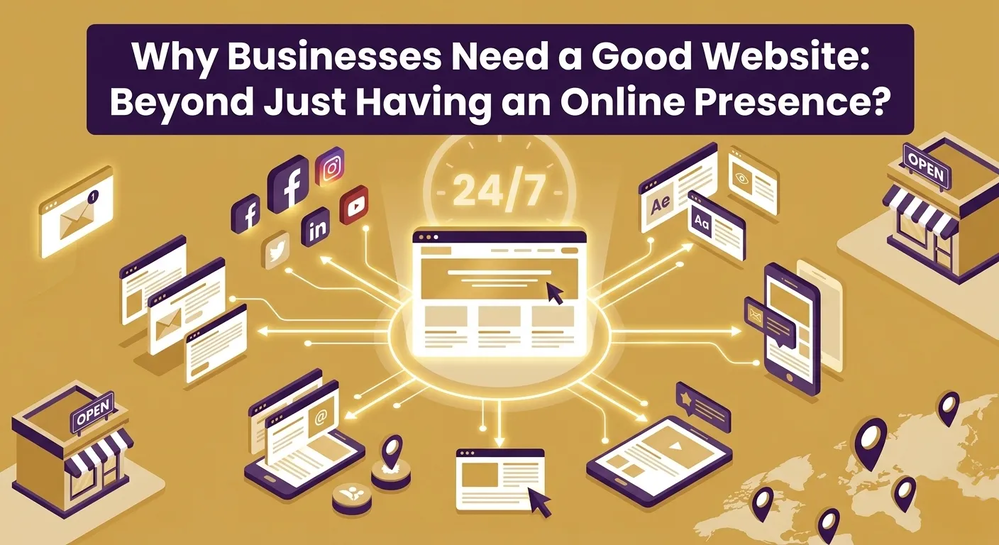
Why Businesses Need a Good Website: Beyond Just Having an Online Presence?

Many business owners make a costly mistake by treating their website as a digital business card, something that simply confirms the business exists. That mindset leaves enormous revenue potential entirely unrealized. A strategically designed website is your most tireless salesperson, operating continuously, reaching customers across geographies, qualifying leads, and generating inquiries while you focus on running your business.

The importance of website design for business extends well beyond the site itself. Your website is where your paid advertising campaigns send traffic. It is where your social media followers come to understand what you actually offer. It is where journalists, investors, and potential partners form their first serious impression of your organization. Every digital channel you invest in, email marketing, content, social media, paid search, ultimately drives back to your website. That means your website’s quality determines the real world ROI of every other marketing rupee you spend.

A professionally designed website also gives you full ownership over your brand narrative. On social platforms, algorithms decide who sees your content, when, and at what cost. On your website, you control the message, the design, the user journey, and the conversion path entirely. That ownership becomes strategically priceless as third party platforms grow increasingly expensive and unpredictable.

Website Design as a Competitive Differentiator in Your Industry

In virtually every industry today, your competitors have a website. The relevant question is no longer whether you need one, it is whether yours performs better than theirs. A superior website does not simply look more polished; it loads faster, communicates your value more immediately, and converts visitors at a measurably higher rate. These advantages compound month over month, creating a widening performance gap between businesses that invest thoughtfully in design and those that treat it as a line item to minimize.

How a Professional Website Anchors LongTerm Brand Building?

Brand consistency across all customer touchpoints builds recognition and trust over time, but that consistency needs an anchor. Your website sets the visual and tonal standard for your entire brand identity. The colors, typography, voice, and imagery established in your website design should carry through your email campaigns, social profiles, presentations, and offline materials. Without a professionally designed website as that foundation, maintaining meaningful brand consistency becomes structurally impossible.

Experienced agencies like Adlivetech approach website projects as complete brand communication systems, not just collections of pages, because they understand that design decisions made on the website ripple outward into every other channel the business operates.

Impact of Website Speed on Business Success

Website speed is not a technical detail that belongs in a developer’s conversation, it is a direct business metric that belongs in your revenue discussions. A onesecond delay in page load time can reduce conversions by up to 7%. When your site takes more than three seconds to load, more than half of your mobile visitors abandon it before a single word of your content is read. Speed is not separate from design, speed is part of the design.

Slow websites frustrate users, damage brand perception, and actively suppress your search engine visibility. Google has formally incorporated page speed into its ranking algorithm through its Core Web Vitals framework, which means a slow website does not only lose customers at the point of visit, it also loses organic traffic upstream because search engines deprioritize it in results. The damage compounds in two directions simultaneously.

Optimizing website speed involves strategic image compression, clean and efficient code, fast and reliable hosting infrastructure, content delivery networks, and careful management of third party scripts and plugins. None of these are optional refinements for businesses that are serious about digital performance. A visually stunning website that loads slowly is the equivalent of a beautifully designed store with a jammed front door, the experience fails completely before it even begins, and no amount of interior design can compensate for that failure.

Some of Our Recent Blogs

SMM vs SEO: Which is Better for New Businesses?

The Ultimate Guide to Digital Marketing for Startups in India

Why Every Startup Needs SEO from Day One?

FAQs

1. How does website design directly impact business revenue?

Website design shapes how long visitors stay, how much they trust your brand, and whether they take action, all of which directly determine your conversion rate and revenue. 

2. What is the most important element of website design for small businesses? 

For small businesses, trust building elements carry the greatest weight, a professional layout, clear contact information, authentic client testimonials, and fast load times. 

3. How often should a business update or redesign its website? 

Most experts recommend a full redesign every three to five years, with ongoing improvements throughout. Technology evolves, user expectations shift, and an outdated website can actively damage your brand perception and search rankings even if the business itself is thriving.

4. Does website design affect SEO performance? 

Yes, profoundly. Search engines evaluate site structure, mobile responsiveness, page speed, and engagement metrics like bounce rate and time on page, all of which are direct products of your design decisions.

5. Can a poorly designed website hurt a business with a genuinely great product or service? 

Absolutely. A strong product cannot overcome a website that communicates distrust, loads slowly, or leaves visitors confused about what to do next. 

SMM vs SEO: Which is Better for New Businesses?

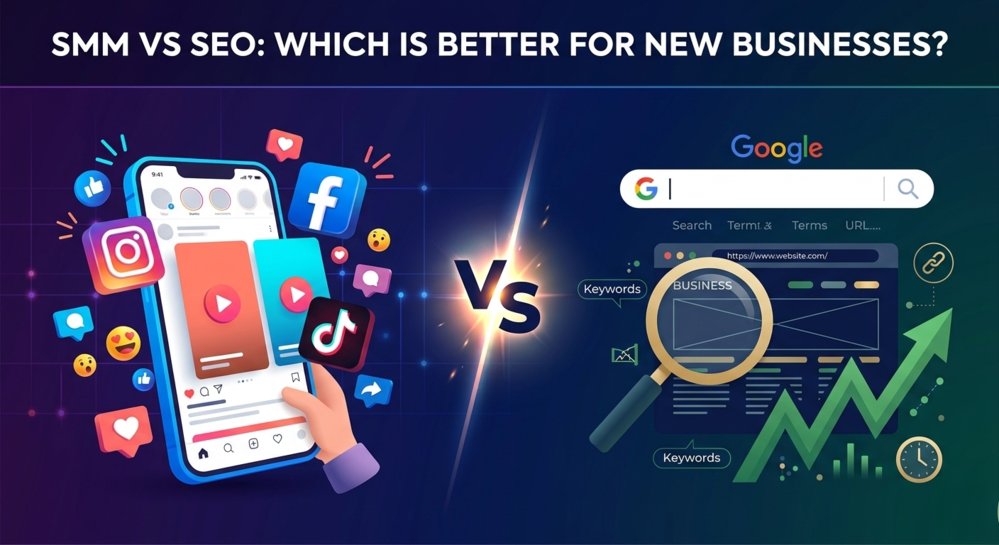
When people ask which one is better, SEO or SMM, then honestly there is no straight answer. It just depends, if you want quick attention and fast traction, SMM usually wins while if you’re thinking long-term, steady traffic, and building something that lasts, SEO takes the lead. Most new businesses, especially those figuring things out as they go, end up needing both as part of their digital marketing for new businesses strategy.

Difference Between SEO and SMM

Coming onto the difference between SEO and SMM in a way that actually makes sense, not just textbook definitions.

SEO is about showing up when someone is already searching. Like, if someone types “interior designer near me,” and your site appears right there, that’s SEO doing its job. SMM, on the other hand, is like showing up in someone’s feed while they’re casually scrolling. As they weren’t looking for you, but now they see you. That small difference changes everything.

SEO works on intent. SMM works on attention. With SEO, you’re answering a need that already exists. With SMM, you’re kind of creating that need or at least nudging it. And honestly, both matter. Because not every customer starts with a search, some discover brands first, then search later.

Also, SEO feels slower. It is slower. You don’t rank tomorrow, if you publish a blog today, it doesn’t work like that. SMM though? You post something today, it can get traction within hours. Sometimes even minutes if it clicks.

Quick Comparison Table 

BasisSEOSMM
Core FocusCapturing search intentGrabbing attention and creating awareness
User BehaviorUsers are actively searchingUsers are casually browsing
Speed of ResultsSlow, takes time to buildFast, can show results quickly
Content TypeBlogs, articles, landing pagesReels, posts, stories, videos
Traffic SourceSearch engines like Google + AI tools / LLMs surfacing content Social media platforms
LongevityLong-lasting resultsShort-lived content visibility
Conversion IntentHigh, users already lookingModerate, users need to be convinced

SEO or Social Media for Small Business: What to Choose First?

If you’ve just launched, like literally just started, SMM usually makes more sense first. Why? Because you need visibility. You need people to know you exist. And waiting 3 to 4 months for SEO to kick in can feel painful.

Social media gives you that early push. You post, you engage, you experiment. You start understanding what people respond to. It’s messy, not always consistent, but useful. SEO comes in a bit later, or at least alongside. Because at some point, you’ll want people to find you without you constantly pushing content. That’s where SEO quietly does its thing in the background.

A lot of agencies, like adlivetech, for example, actually recommend starting with SMM for traction while slowly building SEO. Not rushing it, just building it properly over time.

When to Choose SMM First?

  • You Need Quick Visibility : You don’t want to wait months. Totally fair. Social media helps you get seen almost immediately. It’s not guaranteed, but the chances are higher compared to SEO in the early days.
  • You’re Still Figuring Out Your Brand : Your tone, your messaging, what works, SMM helps you test all of this. You post different things, see what clicks. It’s kind of like live feedback.
  • Budget is Tight : You can start with zero budget if needed. Just organic posts. Ads help, yes, but they’re not mandatory at the beginning.
  • You Want Conversations, Not Just Traffic : Comments, DMs, replies… SMM gives you direct interaction. That’s something SEO doesn’t really offer.
  • You’re Testing Your Offer : Not sure what sells best? Social media helps you experiment quickly. You’ll know pretty fast what people are interested in.

Why is SEO Important in Digital Marketing for New Businesses?

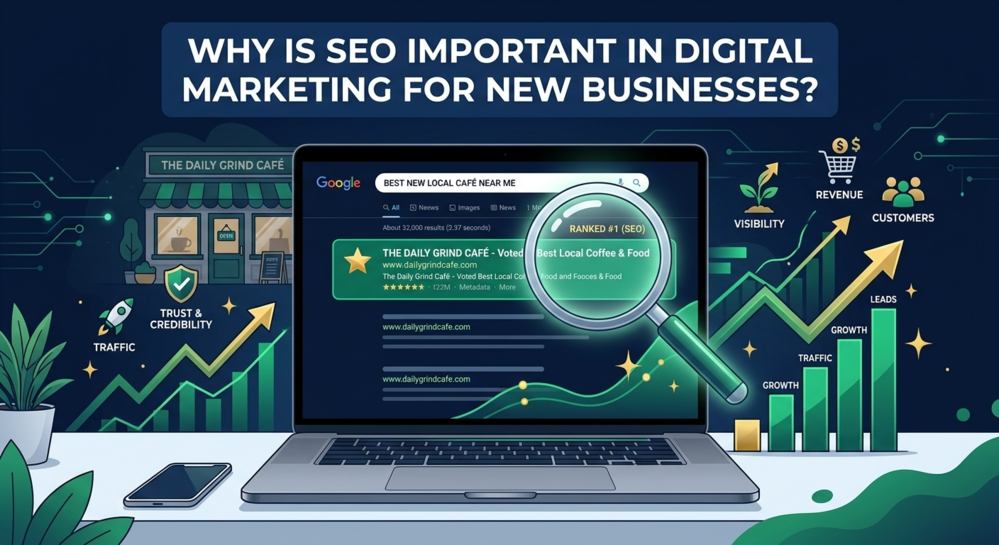
Now let’s not ignore SEO, because honestly, it’s one of the backbone of digital marketing for new businesses, even if it doesn’t feel exciting at first. SEO is slow, yes. But it’s steady.

Once your pages start to rank, you don’t have to look for traffic every single day. It just… comes. Not magically, of course, you still need to maintain things, but it’s way more stable compared to social media. 

Also, people trust search results differently. If your website shows up on Google, especially on the first page, it builds credibility and trust. It signals that you’re legit. And over time, this compounds.

Benefits of SEO for Long-Term Growth

  • Consistent Traffic : Once rankings start improving, traffic becomes more predictable. Not overnight, but gradually. And that consistency matters.
  • Better Conversion Chances : People searching are already interested. They’re not just browsing, they’re looking. That intent makes a big difference.
  • Trust Building : Showing up on Google builds a sense of authority. People assume you’re credible. It’s subtle, but powerful.
  • Lower Cost Over Time : Initial effort is high, no doubt. But later, you’re not paying per click. That reduces long-term costs.
  • Supports Everything Else : Your ads, your social media, all of it works better when your website is strong. SEO improves that foundation.

Which is Better SEO or SMM for New Businesses?

Neither. Or both. Depends how you look at it. SMM gives you speed. SEO gives you stability. If you rely only on SMM, you’ll constantly need to create, post, push which can get exhausting. If you rely only on SEO, growth might feel too slow in the beginning.

The smarter approach is mixing both, even if not equally at first. Start with SMM to get attention. Build SEO quietly in the background. Over time, let SEO take more weight while SMM continues to support engagement and branding. That balance, yeah, that’s where things start working properly.

Best Strategy for New Businesses

  • Use SMM to Get Started : Get your name out there. And then just start posting, testing, and learning.
  • Build SEO Slowly : Don’t rush rankings. Focus on good content, proper structure. It takes time, but it pays off.
  • Connect Both Channels : Share your blogs on social media. Drive traffic to your site. Let both support each other.
  • Focus on Real Content : Not just keywords or trends, actual useful content. That’s what works long-term.
  • Keep Adjusting : What works today might not work next month. So keep learning.

Read our Recent Blogs 

FAQs 

1. What is the difference between SEO and SMM?

SEO brings people from search engines, while SMM brings people from social platforms. One is intent based, the other is discovery based.

2. SEO or social media for small business which is better?

Social media works faster in the beginning. SEO works better over time. Using both is usually the smarter move.

3. Which is better SEO or SMM for quick results?

SMM, without a doubt for quick results. You can see engagement almost immediately compared to SEO.

4. Why is SEO important in digital marketing for new businesses?

Because it builds long term traffic and trust. You don’t have to rely only on ads or social media forever.

5. Can I rely only on SMM for my business?

You can but it’s risky. As algorithms change so does you need to update social media as per it every time while SEO gives you more stability in the long run.