Click here
Lorem Ipsum is simply dumy text of the printing typesetting industry lorem ipsum.
Schedule Call

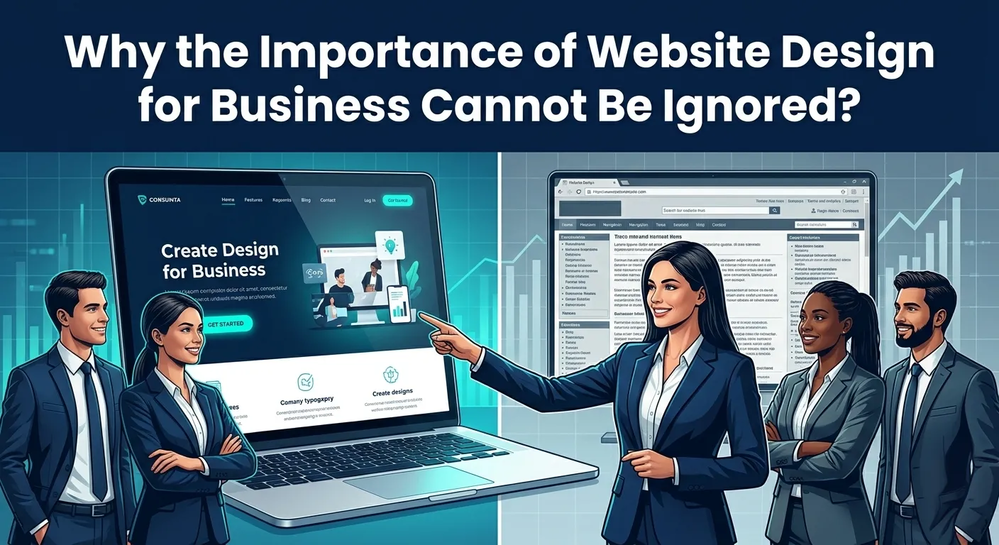
Why the Importance of Website Design for Business Cannot Be Ignored?

Your website is the single most powerful asset your business owns online, and its design determines whether visitors trust you, stay, or leave within seconds. The importance of website design for business goes far beyond how things look; it directly shapes customer perception, drives conversions, and defines your brand credibility at every digital touchpoint. If your website is not working hard for your business, it is actively working against it.

How Website Design Affects Customers and Their Buying Decisions?

First impressions online happen in milliseconds. Research consistently shows that users form an opinion about a website within 0.05 seconds of landing on it, and that judgment directly influences whether they stay, explore, or bounce. A cluttered, outdated, or confusing design sends one clear message to your potential customer: this business cannot be trusted.

When a visitor lands on your website, they are subconsciously evaluating your professionalism, your attention to detail, and your understanding of their needs. A visually appealing layout with clear navigation communicates that you take your business seriously. Contrast that with a site that has broken links, inconsistent fonts, and no clear call to action, that customer will click away and hand their money to your competitor in seconds.

Beyond aesthetics, website design directly affects how your customers feel. Colors, typography, white space, and imagery work together to create an emotional atmosphere. A law firm’s site needs to feel authoritative and calm. A children’s brand needs to feel playful and safe. When design aligns with your audience’s psychology, customers feel understood, and that emotional resonance is precisely what turns casual browsers into paying buyers. Teams like Adlivetech, with over a decade of hands-on experience building conversion focused websites, understand this psychological alignment and engineer it deliberately into every project they take on.

The Role of Visual Hierarchy in Guiding Customer Attention

Visual hierarchy is the strategic arrangement of design elements that guides your visitor’s eye toward what matters most, your value proposition, your key service, your call to action. Without it, visitors feel disoriented and uncertain about what to do next, and an uncertain visitor is a lost customer.

Effective visual hierarchy uses size, contrast, color, and spacing to prioritize information. Your most important message should be the very first thing a visitor registers. Supporting information follows naturally. Your call to action is always positioned where the eye lands after processing the core message. When this intentional flow is disrupted or missing, your conversion rate drops sharply, regardless of how good your actual product or service is.

Trust Signals That Your Website Design Must Communicate

Before any visitor makes a decision, whether that is filling out your contact form, making a purchase, or simply spending five more minutes on your site, they are actively scanning for trust signals. These include a professional logo, consistent brand colors, readable typography, SSL security indicators, and real client testimonials with authentic names and context.

A poorly designed website undermines every trust signal you attempt to place on it. Even a genuine five star review looks suspicious when it sits on a page that looks unreliable or unprofessional. Design is the frame around your credibility, and a broken frame damages the content inside it. If you are serious about building customer confidence online, your website design is where that work begins.

Website Design and User Experience: The Foundation of Online Success

User experience, commonly called UX, refers to how a person feels when interacting with your website: how effortlessly they find information, how fast pages respond, how logical the navigation flow is, and how satisfying the overall journey feels. The importance of website design for business is perhaps nowhere more measurable than in UX, because poor user experience directly kills conversions in ways that show up in your analytics and your revenue.

Great UX design begins with a deep understanding of your target audience. What are they actually looking for? What questions need to be answered before they feel ready to act? What frustrations do they carry from poor experiences on other websites? When your design answers those questions before the visitor even consciously formulates them, the experience feels effortless and natural. That seamless quality is what builds repeat visits, referrals, and long term customer loyalty.

Mobile responsiveness is no longer optional, it is a baseline expectation. With more than 60% of global web traffic now arriving from mobile devices, a website that renders beautifully on a desktop but breaks on a phone is a direct business liability. Responsive design ensures that your website adapts perfectly to every screen size, preserving usability, readability, and visual quality whether your customer is on a widescreen monitor or an older smartphone in poor lighting. At Adlivetech, mobile first design is treated as a nonnegotiable standard across all website development projects, not an afterthought added during final testing.

Navigation Design and Its Direct Effect on Bounce Rate

Navigation is the structural backbone of user experience. When visitors cannot find what they need within two to three clicks, they leave, and a high bounce rate tells search engines that your content is not satisfying user intent, which in turn damages your organic rankings. Poor navigation costs you twice: once in lost customers and once in lost SEO equity.

Smart navigation design keeps menus focused and limited to your most strategically important pages. It uses clear, descriptive labels instead of clever but cryptic ones. It ensures that every page offers a logical next step, whether that means reading a related article, viewing a service, or reaching your contact page. Navigation is not merely a design choice, it is a revenue generating system that either moves customers forward or sends them away.

Accessibility in Web Design: Reaching Every Customer You Deserve

Accessible website design means building a site that works for people with visual, auditory, motor, or cognitive differences. This includes sufficient color contrast, descriptive alt text for images, keyboard friendly navigation, and font sizes that do not require squinting. Beyond being ethically sound, accessibility measurably expands your addressable market and reduces legal exposure in many regions where accessibility compliance is mandated.

Accessibility and strong UX are not competing priorities, they reinforce each other. When you design for the most demanding use cases, the experience improves for every single visitor. A site with logical structure, clear labeling, and high contrast is simply easier and more pleasant for all users, regardless of ability level.

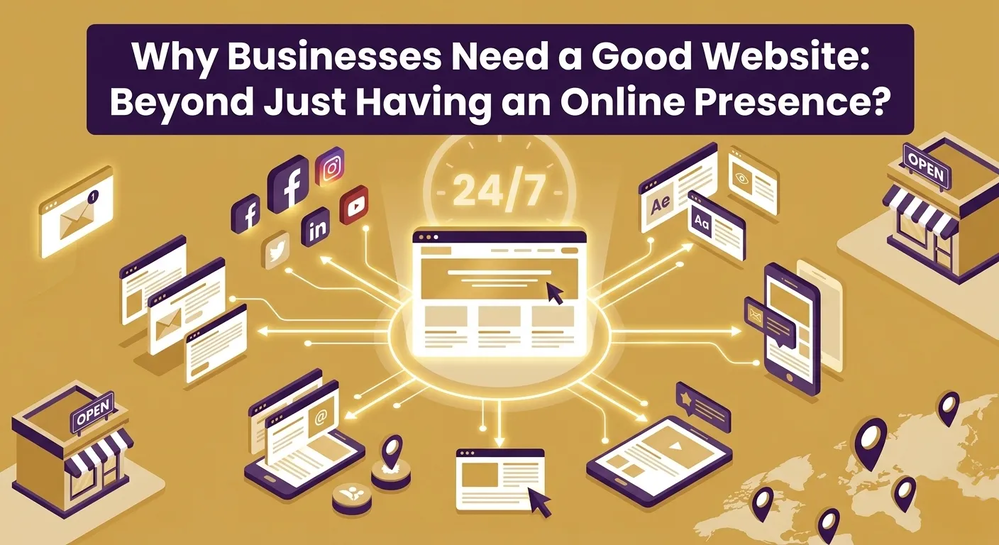
Why Businesses Need a Good Website: Beyond Just Having an Online Presence?

Many business owners make a costly mistake by treating their website as a digital business card, something that simply confirms the business exists. That mindset leaves enormous revenue potential entirely unrealized. A strategically designed website is your most tireless salesperson, operating continuously, reaching customers across geographies, qualifying leads, and generating inquiries while you focus on running your business.

The importance of website design for business extends well beyond the site itself. Your website is where your paid advertising campaigns send traffic. It is where your social media followers come to understand what you actually offer. It is where journalists, investors, and potential partners form their first serious impression of your organization. Every digital channel you invest in, email marketing, content, social media, paid search, ultimately drives back to your website. That means your website’s quality determines the real world ROI of every other marketing rupee you spend.

A professionally designed website also gives you full ownership over your brand narrative. On social platforms, algorithms decide who sees your content, when, and at what cost. On your website, you control the message, the design, the user journey, and the conversion path entirely. That ownership becomes strategically priceless as third party platforms grow increasingly expensive and unpredictable.

Website Design as a Competitive Differentiator in Your Industry

In virtually every industry today, your competitors have a website. The relevant question is no longer whether you need one, it is whether yours performs better than theirs. A superior website does not simply look more polished; it loads faster, communicates your value more immediately, and converts visitors at a measurably higher rate. These advantages compound month over month, creating a widening performance gap between businesses that invest thoughtfully in design and those that treat it as a line item to minimize.

How a Professional Website Anchors LongTerm Brand Building?

Brand consistency across all customer touchpoints builds recognition and trust over time, but that consistency needs an anchor. Your website sets the visual and tonal standard for your entire brand identity. The colors, typography, voice, and imagery established in your website design should carry through your email campaigns, social profiles, presentations, and offline materials. Without a professionally designed website as that foundation, maintaining meaningful brand consistency becomes structurally impossible.

Experienced agencies like Adlivetech approach website projects as complete brand communication systems, not just collections of pages, because they understand that design decisions made on the website ripple outward into every other channel the business operates.

Impact of Website Speed on Business Success

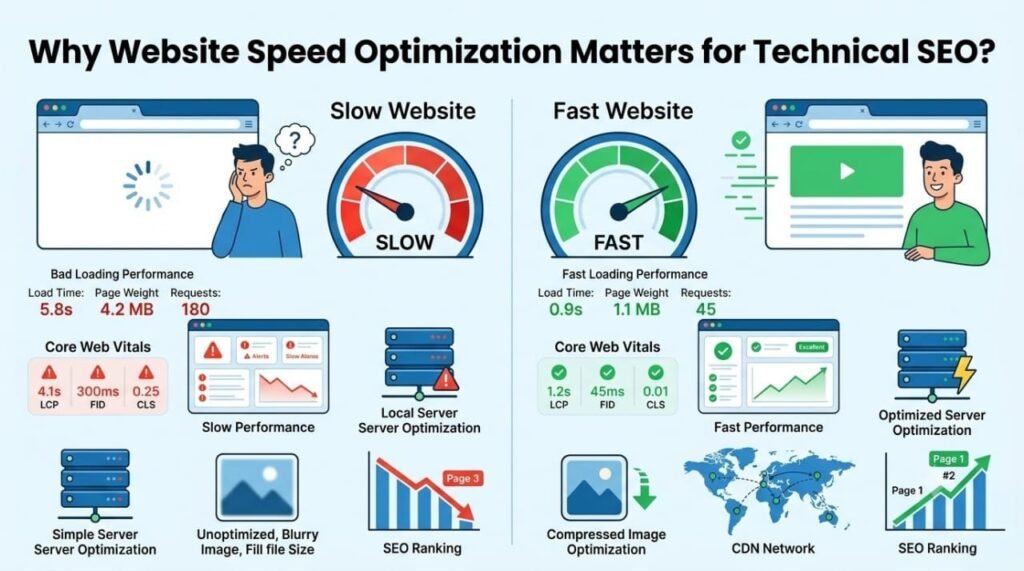
Website speed is not a technical detail that belongs in a developer’s conversation, it is a direct business metric that belongs in your revenue discussions. A onesecond delay in page load time can reduce conversions by up to 7%. When your site takes more than three seconds to load, more than half of your mobile visitors abandon it before a single word of your content is read. Speed is not separate from design, speed is part of the design.

Slow websites frustrate users, damage brand perception, and actively suppress your search engine visibility. Google has formally incorporated page speed into its ranking algorithm through its Core Web Vitals framework, which means a slow website does not only lose customers at the point of visit, it also loses organic traffic upstream because search engines deprioritize it in results. The damage compounds in two directions simultaneously.

Optimizing website speed involves strategic image compression, clean and efficient code, fast and reliable hosting infrastructure, content delivery networks, and careful management of third party scripts and plugins. None of these are optional refinements for businesses that are serious about digital performance. A visually stunning website that loads slowly is the equivalent of a beautifully designed store with a jammed front door, the experience fails completely before it even begins, and no amount of interior design can compensate for that failure.

Some of Our Recent Blogs

SMM vs SEO: Which is Better for New Businesses?

The Ultimate Guide to Digital Marketing for Startups in India

Why Every Startup Needs SEO from Day One?

FAQs

1. How does website design directly impact business revenue?

Website design shapes how long visitors stay, how much they trust your brand, and whether they take action, all of which directly determine your conversion rate and revenue. 

2. What is the most important element of website design for small businesses? 

For small businesses, trust building elements carry the greatest weight, a professional layout, clear contact information, authentic client testimonials, and fast load times. 

3. How often should a business update or redesign its website? 

Most experts recommend a full redesign every three to five years, with ongoing improvements throughout. Technology evolves, user expectations shift, and an outdated website can actively damage your brand perception and search rankings even if the business itself is thriving.

4. Does website design affect SEO performance? 

Yes, profoundly. Search engines evaluate site structure, mobile responsiveness, page speed, and engagement metrics like bounce rate and time on page, all of which are direct products of your design decisions.

5. Can a poorly designed website hurt a business with a genuinely great product or service? 

Absolutely. A strong product cannot overcome a website that communicates distrust, loads slowly, or leaves visitors confused about what to do next. 

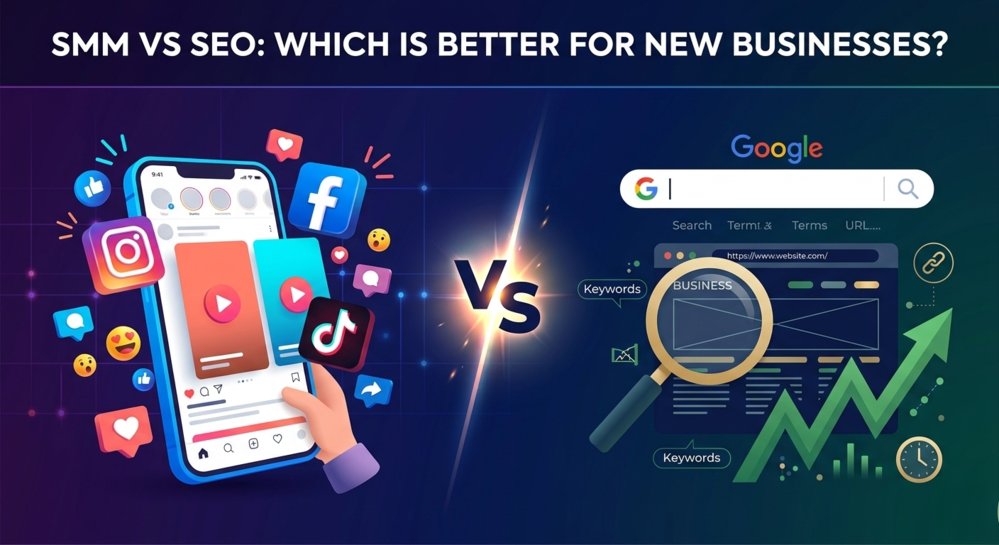
SMM vs SEO: Which is Better for New Businesses?

When people ask which one is better, SEO or SMM, then honestly there is no straight answer. It just depends, if you want quick attention and fast traction, SMM usually wins while if you’re thinking long-term, steady traffic, and building something that lasts, SEO takes the lead. Most new businesses, especially those figuring things out as they go, end up needing both as part of their digital marketing for new businesses strategy.

Difference Between SEO and SMM

Coming onto the difference between SEO and SMM in a way that actually makes sense, not just textbook definitions.

SEO is about showing up when someone is already searching. Like, if someone types “interior designer near me,” and your site appears right there, that’s SEO doing its job. SMM, on the other hand, is like showing up in someone’s feed while they’re casually scrolling. As they weren’t looking for you, but now they see you. That small difference changes everything.

SEO works on intent. SMM works on attention. With SEO, you’re answering a need that already exists. With SMM, you’re kind of creating that need or at least nudging it. And honestly, both matter. Because not every customer starts with a search, some discover brands first, then search later.

Also, SEO feels slower. It is slower. You don’t rank tomorrow, if you publish a blog today, it doesn’t work like that. SMM though? You post something today, it can get traction within hours. Sometimes even minutes if it clicks.

Quick Comparison Table 

BasisSEOSMM
Core FocusCapturing search intentGrabbing attention and creating awareness
User BehaviorUsers are actively searchingUsers are casually browsing
Speed of ResultsSlow, takes time to buildFast, can show results quickly
Content TypeBlogs, articles, landing pagesReels, posts, stories, videos
Traffic SourceSearch engines like Google + AI tools / LLMs surfacing content Social media platforms
LongevityLong-lasting resultsShort-lived content visibility
Conversion IntentHigh, users already lookingModerate, users need to be convinced

SEO or Social Media for Small Business: What to Choose First?

If you’ve just launched, like literally just started, SMM usually makes more sense first. Why? Because you need visibility. You need people to know you exist. And waiting 3 to 4 months for SEO to kick in can feel painful.

Social media gives you that early push. You post, you engage, you experiment. You start understanding what people respond to. It’s messy, not always consistent, but useful. SEO comes in a bit later, or at least alongside. Because at some point, you’ll want people to find you without you constantly pushing content. That’s where SEO quietly does its thing in the background.

A lot of agencies, like adlivetech, for example, actually recommend starting with SMM for traction while slowly building SEO. Not rushing it, just building it properly over time.

When to Choose SMM First?

  • You Need Quick Visibility : You don’t want to wait months. Totally fair. Social media helps you get seen almost immediately. It’s not guaranteed, but the chances are higher compared to SEO in the early days.
  • You’re Still Figuring Out Your Brand : Your tone, your messaging, what works, SMM helps you test all of this. You post different things, see what clicks. It’s kind of like live feedback.
  • Budget is Tight : You can start with zero budget if needed. Just organic posts. Ads help, yes, but they’re not mandatory at the beginning.
  • You Want Conversations, Not Just Traffic : Comments, DMs, replies… SMM gives you direct interaction. That’s something SEO doesn’t really offer.
  • You’re Testing Your Offer : Not sure what sells best? Social media helps you experiment quickly. You’ll know pretty fast what people are interested in.

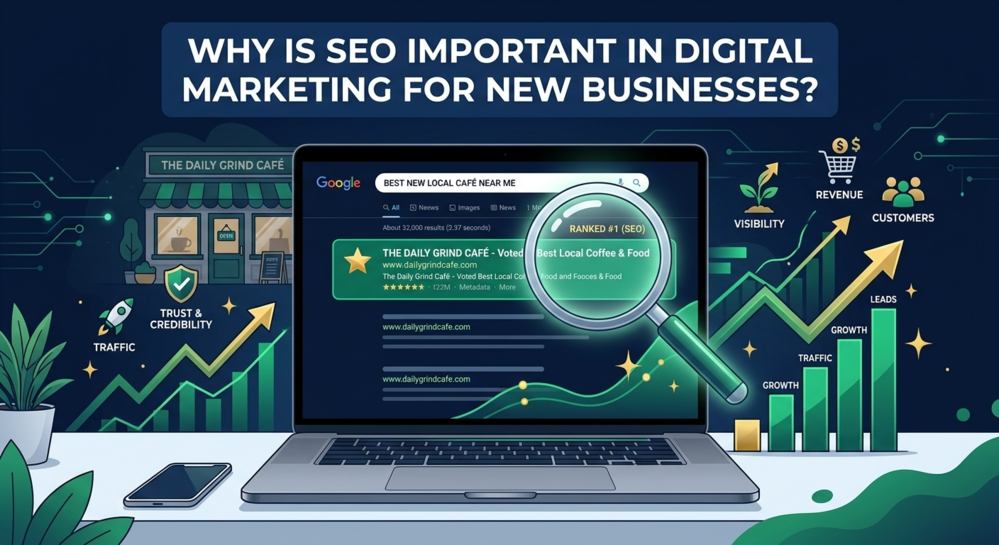
Why is SEO Important in Digital Marketing for New Businesses?

Now let’s not ignore SEO, because honestly, it’s one of the backbone of digital marketing for new businesses, even if it doesn’t feel exciting at first. SEO is slow, yes. But it’s steady.

Once your pages start to rank, you don’t have to look for traffic every single day. It just… comes. Not magically, of course, you still need to maintain things, but it’s way more stable compared to social media. 

Also, people trust search results differently. If your website shows up on Google, especially on the first page, it builds credibility and trust. It signals that you’re legit. And over time, this compounds.

Benefits of SEO for Long-Term Growth

  • Consistent Traffic : Once rankings start improving, traffic becomes more predictable. Not overnight, but gradually. And that consistency matters.
  • Better Conversion Chances : People searching are already interested. They’re not just browsing, they’re looking. That intent makes a big difference.
  • Trust Building : Showing up on Google builds a sense of authority. People assume you’re credible. It’s subtle, but powerful.
  • Lower Cost Over Time : Initial effort is high, no doubt. But later, you’re not paying per click. That reduces long-term costs.
  • Supports Everything Else : Your ads, your social media, all of it works better when your website is strong. SEO improves that foundation.

Which is Better SEO or SMM for New Businesses?

Neither. Or both. Depends how you look at it. SMM gives you speed. SEO gives you stability. If you rely only on SMM, you’ll constantly need to create, post, push which can get exhausting. If you rely only on SEO, growth might feel too slow in the beginning.

The smarter approach is mixing both, even if not equally at first. Start with SMM to get attention. Build SEO quietly in the background. Over time, let SEO take more weight while SMM continues to support engagement and branding. That balance, yeah, that’s where things start working properly.

Best Strategy for New Businesses

  • Use SMM to Get Started : Get your name out there. And then just start posting, testing, and learning.
  • Build SEO Slowly : Don’t rush rankings. Focus on good content, proper structure. It takes time, but it pays off.
  • Connect Both Channels : Share your blogs on social media. Drive traffic to your site. Let both support each other.
  • Focus on Real Content : Not just keywords or trends, actual useful content. That’s what works long-term.
  • Keep Adjusting : What works today might not work next month. So keep learning.

Read our Recent Blogs 

FAQs 

1. What is the difference between SEO and SMM?

SEO brings people from search engines, while SMM brings people from social platforms. One is intent based, the other is discovery based.

2. SEO or social media for small business which is better?

Social media works faster in the beginning. SEO works better over time. Using both is usually the smarter move.

3. Which is better SEO or SMM for quick results?

SMM, without a doubt for quick results. You can see engagement almost immediately compared to SEO.

4. Why is SEO important in digital marketing for new businesses?

Because it builds long term traffic and trust. You don’t have to rely only on ads or social media forever.

5. Can I rely only on SMM for my business?

You can but it’s risky. As algorithms change so does you need to update social media as per it every time while SEO gives you more stability in the long run.

Why Every Startup Needs SEO from Day One?

Launching a startup is exciting, you have a vision, a product or service you believe in, and the passion to grow. But with millions of businesses competing online, how do you ensure your startup stands out? The answer lies in SEO (Search Engine Optimization).

The importance of SEO for startups cannot be overstated. Unlike paid advertising, which stops bringing results as soon as you pause spending, SEO builds long-term visibility and organic growth. When done right from day one, it gives your business the foundation to attract quality traffic, build credibility, and compete with bigger players.

In this blog, we’ll break down why startups should prioritize SEO from the start, the key SEO benefits for new businesses, and actionable tips for entrepreneurs.

The Importance of SEO

For startups, each advertising choice topics. Limited budgets suggest you may’t manage to pay for to waste cash on techniques that don’t supply lasting outcomes. SEO is one of the most fee-effective methods to develop. By optimizing your website for engines like google, you make sure that ability clients can find you after they search for services or products you offer.

Think of SEO as laying the virtual foundation of your business. Just like no constructing can stand tall with out a strong base, no startup can live to tell the tale long in nowadays’s digital-first world with out visibility on Google and different search engines.

Key SEO Benefits for New Businesses

1. Long-Term Online Visibility

While paid advertisements convey on the spot visibility, search engine optimization guarantees that your internet site appears in the front of your target audience continuously over the years. This builds consider and credibility.

2. Cost-Effective Marketing

Startups frequently perform on tight budgets. SEO is far greater low priced as compared to paid campaigns and offers sustainable effects. Once your pages begin ranking, you’ll hold receiving visitors with out ongoing advert spend.

3. Builds Trust and Brand Authority

Customers tend to consider agencies that seem on the first page of Google. Strong scores show credibility, that is mainly critical for a brand new business trying to make a name.

4. Attracts Quality Traffic

Search engine optimization specializes in bringing in users who’re already searching for your services or products. This manner better conversion charges and higher ROI in comparison to generic advertising and marketing.

5. Levels the Playing Field

Even in case you’re competing with established brands, search engine marketing gives your startup a preventing chance. With clever keyword targeting, robust content, and consistent attempt, small agencies can outrank large names.

How SEO Helps Small Companies Grow?

search engine optimization does greater than just power site visitors; it immediately contributes to commercial enterprise growth. 

Here’s how:

  • Better Lead Generation: Optimized content material brings in leads that are much more likely to transform.
  • Higher Brand Awareness: Appearing in search effects will increase visibility and logo consider.
  • Scalability: As your commercial enterprise grows, your search engine marketing foundation scales with you, helping growth into new markets or offerings.
  • Local Growth: For startups concentrated on a specific location, local SEO ensures you attain nearby customers correctly.

SEO Tips for Entrepreneurs

  1. Research Keywords Early: Focus on terms your customers certainly look for, like “low priced digital advertising for startups.”
  2. Optimize Your Website: Ensure your internet web page is cell-great, rapid-loading, and clean to navigate.
  3. Publish High-Quality Content: Blogs, courses, and FAQs tailored in your target market’s desires will assist you rank and construct trust.
  4. Leverage Local SEO: Add your commercial enterprise to Google Business Profile and local directories to attract close by clients.
  5. Track and Improve: Use equipment like Google Analytics and Search Console to degree performance and refine your method.

Conclusion

The importance of search engine marketing for startups lies in its ability to offer sustainable growth, robust brand visibility, and a competitive edge in crowded markets. By investing in a Best SEO Company for Business & Startups from day one, startups not only save on advertising costs but also build a foundation for long-term success. If you’re ready to take your startup to the next level, explore our SEO offerings and allow us to help you grow smarter and faster.

FAQs  

Q1: Why is search engine marketing important for startups?

search engine optimization facilitates startups build on line visibility, entice organic traffic, and compete with set up manufacturers with out heavy advertising and marketing fees.

Q2: How soon can startups see results from search engine optimization?

search engine marketing commonly takes 3–6 months to expose major results, depending on competition and approach. That’s why it’s vital to begin early.

Q3: Is search engine marketing higher than paid ads for startups?

Paid ads deliver instantaneous traffic, but when you prevent paying, consequences vanish. Search engine optimization offers lengthy-time period, price-effective visibility, making it a better investment for startups.

Q4: Can small organizations truly compete with big manufacturers via search engine optimization?

Yes! By concentrated on niche keywords and generating excellent content material, startups can outrank larger competition in specific search regions.

Q5: What are some easy search engine marketing hints for entrepreneurs?

Focus on key-word studies, optimize your internet site, publish treasured content material, work on neighborhood search engine optimization, and often song your performance.

The Ultimate Guide to Digital Marketing for Startups in India

Outline of the Article 

  1. Introduction
  2. Understanding the Digital Marketing
  3. Key Digital Marketing Channels
  4. Digital Marketing Tips
  5. Growth Hacks 
  6. Common Mistakes
  7. Tools and Resources for Startups
  8. Case Studies
  9. Future Trends
  10. Conclusion
  11.  FAQs

Why Digital Marketing Matters for Startups?

Starting a commercial enterprise in India is exciting but tough. With lots and hundreds of startups rising every three hundred and sixty five days, standing out is hard. This is wherein digital advertising and marketing is to be had in. Digital marketing lets in startups to acquire the proper goal marketplace, grow brand awareness, and pressure sales with out breaking the economic organization. Whether you are simply launching or looking to scale, know-how virtual advertising is essential for survival and fulfillment.

Understanding the Digital Marketing Landscape in India

India has over 900 million net users, making it actually one in every of the most important on-line markets in the international. Mobile internet utilization dominates, because of this startups have to attention on mobile-friendly campaigns. Social media structures like Instagram, Facebook, LinkedIn, and YouTube are broadly used, while search engines like google like Google stay the primary source for records and products.

Key Digital Marketing Channels

Social Media Marketing

Social media is a price-effective way to connect to your target market. Startups can share content, run paid campaigns, and have interaction directly with clients. Platforms like Instagram and Facebook are notable for B2C companies, while LinkedIn is right for B2B startups.

Search Engine Optimization (search engine marketing)

search engine optimization facilitates your startup appear in search results without buying commercials. Optimizing your website with relevant keywords, like Digital Marketing Tips for Startups, improving page speed, and growing first-rate content material can power natural traffic over the years.

Content Marketing

Content is king. Blogs, videos, infographics, and eBooks teach your audience, build consider, and function your logo as an authority. A robust content material strategy can entice long-time period clients at minimal fee.

Email Marketing

Email advertising facilitates hold relationships with leads and clients. Personalized campaigns, newsletters, and drip sequences. It can enhance engagement and conversion rates.

Paid Advertising 

Pay-in line with-click on campaigns on Google Ads or social media structures allow startups to attain goal clients quick. Budget-pleasant options like Facebook Ads or Google Smart Campaigns are ideal for novices.

Digital Marketing Strategy for Startups

  • Clear Goals: Start with smooth objectives like growing net web site web site visitors, producing leads, or constructing emblem consciousness. Goals help form your marketing efforts and degree achievement.
  • Identifying Target Audience: Knowing your audience’s demographics, choices, and ache elements ensures your marketing and advertising is applicable and effective.
  • Budget Planning: Startups frequently have confined budgets. Allocate assets wisely among natural techniques (SEO, content material advertising) and paid campaigns for optimum ROI.

Digital Marketing Tips for Startups

Leveraging Low-Cost Marketing Channels

Social media, content material fabric advertising and marketing and marketing, and e mail campaigns offer immoderate returns with minimum prices. Focus to maximise exposure without overspending.

Building a Strong Online Presence

A properly-designed net website online, energetic social media profiles, and ordinary branding assemble credibility and accept as true with along with your goal market.

Using Analytics to Make Decisions

Use equipment like Google Analytics, SEMrush, or HubSpot to song traffic, conversions, and campaign overall performance. Data-driven choices beautify outcomes through the years.

Growth Hacks for Startups

Viral Marketing Tactics

Engaging campaigns, challenges, or interactive content can pass viral, giving your startup immediately popularity.

Influencer Collaborations

For business growth we should Partnering with micro-influencers to your niche related because it can boost credibility and attain notably targeted audiences.

Community Building

Engage with online groups, boards, or social media agencies to create loyal enthusiasts who advise on your logo.

Common Mistakes to Avoid in Digital Marketing

1. Ignoring Mobile Users

With the bulk of human beings surfing and buying through their smartphones, no longer optimizing your internet site and campaigns for mobile can cost you a big target audience. A non-mobile-friendly enjoyment frequently ends in higher jump quotes and lost opportunities.

2. Overlooking search engine optimization

Search Engine Optimization is the backbone of digital visibility. Ignoring the SEO manner your content material and website would possibly never reach the right audience. Without right key-word focused on, on-web page optimization, and link-constructing techniques, even the exceptional campaigns can go overlooked.

3. Focusing on Quantity Over Quality Content

Publishing plenty of content material without specializing in its relevance, accuracy, and cost can damage your emblem. High-fine, enticing, and trouble-solving content material builds accept as true with and authority, at the same time as low-awesome content material can make customers lose interest and reduce credibility.

4. Analysis & Optimization

Relying on assumptions rather than reading real facts can cause wasted assets. Analytics equipment offers insights into user behavior, marketing campaign performance, and ROI, helping you make smarter selections and enhance outcomes through the years.

Tools and Resources for Startups

Case Studies

  • Zomato: Leveraged social media and viral campaigns for brand popularity.
  • Byju’s: Built a robust content-pushed method for training advertising.
  • Nykaa: Combined influencer advertising with content to reach niche audiences.

Upcoming Trends in Digital Marketing for Startups

  • Marketing and Chatbots in Ai Form: Artificial Intelligence is reshaping how startups hook up with customers. From computerized chatbots that offer instantaneous assist to AI tools that examine client behavior, startups can supply quicker, smarter, and greater personalized stories without heavy costs.
  • Voice Search Optimization: With the upward thrust of clever audio system and voice assistants like Alexa and Google Assistant, optimizing content for voice search is becoming vital. Startups that adapt early with the aid of using conversational keywords and neighborhood search engine marketing techniques may have a robust competitive side.
  • Personalized and Interactive Content: Generic content is losing its effect. Startups that offer tailored suggestions, quizzes, polls, or interactive reviews will capture more interest. Personalized content builds stronger relationships and drives higher engagement fees.
  • Short-Form Video Content Domination: Instagram, TikTok, and YouTube Shorts are dominating the digital area. Startups can leverage brief, modern films to exhibit products, tell recollections, and hook up with their target audience.

Conclusion

Digital marketing is a game-changer for startups in India. By choosing the right channels, setting clear goals, and applying effective Digital Marketing Tips for Startups, your business can grow quickly and sustainably. Partnering with a Trusted digital marketing company for startups can further help you start small, track results, and scale intelligently to maximize your digital presence.

FAQs

1. What is the high-quality virtual advertising channel for startups?

Social media marketing is regularly the maximum price-effective for startups, providing excessive engagement at low price.

2. How an awful lot ought to startup spend on virtual advertising and marketing?

Startups need to allocate 10-20% of their revenue, focusing on high-ROI channels like SEO, social media, and electronic mail marketing.

3.Can startups do virtual advertising without an internet site?

Yes, however a website builds credibility and serves as a central hub on your online marketing efforts.

4. How long does it take to see effects from digital advertising?

SEO and content material marketing may take 3-6 months, while paid campaigns can generate on the spot effects.

5. What is the role of analytics in digital advertising?

The Analytics assist has the power of track performance, optimize campaigns, and make informed records-pushed choices.