

If you are trying to grow your website in 2026, learning On-Page SEO is honestly one of the smartest places to start. It is not just about ranking on Google anymore. Good SEO helps people actually find your content, stay on your website longer, and trust your business a little faster.
A lot of beginners think SEO is too technical or something only big agencies handle. But that is not really true. Once you understand the basics, most of it comes down to creating useful pages, organizing content properly, and making your website easier for both users and search engines to understand.
This guide walks you through a practical beginner SEO checklist, simple on-page SEO techniques, and the real importance of SEO in today’s competitive online space. You will also understand the biggest SEO benefits for new businesses and why small improvements can make a surprisingly big difference over time.
Why On-Page SEO Matters More Than Ever?
The internet is crowded now. Every business, blog, and brand is fighting for attention. So when your website is not optimized properly, it becomes very difficult for Google to understand what your page is actually about. That is where On-Page SEO helps.
It tells search engines:
- what your content covers
- which keywords matter
- how your page is structured
- whether users are having a good experience
And honestly, Google has become much smarter in 2026. It no longer rewards pages just because they repeat keywords twenty times. Search engines now look at content quality, page experience, relevance, and trust signals. So yes, SEO today feels a little more human.
Better Visibility Without Paying for Ads
One of the biggest reasons people invest time into SEO is because organic traffic keeps coming even when you are not running ads.
Think about it. A properly optimized blog post can bring visitors for months or even years. That is a huge advantage for startups or smaller businesses trying to grow on limited budgets.
Some major SEO benefits for new businesses include:
- lower marketing costs
- long-term traffic growth
- improved credibility
- more qualified leads
- stronger online presence
Paid ads stop the moment your budget runs out. SEO does not work like that.
SEO Also Improves User Experience
A lot of people forget this part. Good SEO is not only for Google bots. It actually improves the experience for real users too. And that matters because if visitors leave your website immediately, rankings usually drop over time.
A properly optimized page feels easier to use. It loads faster. The headings make sense. The content flows naturally. Users do not feel lost while reading.
Small things like:
- mobile-friendly layouts
- readable text
- faster loading speed
- organized headings
- internal links
all contribute to better engagement. And honestly, Google notices that stuff.
Beginner SEO Checklist You Should Actually Follow
When people start learning SEO, they often jump straight into advanced strategies and end up overwhelmed. That usually leads to confusion, random optimization, and sometimes even harmful SEO practices. The better approach is simpler. Start with the fundamentals first.
Start With Keyword Research
Before writing anything, you need to know what people are searching for. That sounds obvious, but beginners skip this all the time.
Keyword research helps you understand:
- what users want
- how they search
- which phrases have traffic potential
- what type of content ranks already
For example, someone searching for “SEO basics for beginners” probably wants clear and simple explanations. They are not looking for highly technical audits or coding tutorials.
That context matters a lot. When choosing keywords:
- focus on search intent
- target realistic phrases
- avoid extremely competitive terms initially
- use long-tail keywords naturally
And please do not stuff keywords everywhere. That strategy stopped working years ago.
Optimize Titles and Meta Descriptions Properly
Your title is usually the first thing users see on Google. If it looks boring or unclear, people simply will not click.
A strong SEO title should:
- include the main keyword
- feel natural
- explain the topic clearly
- create curiosity without sounding clickbait-y
For example:
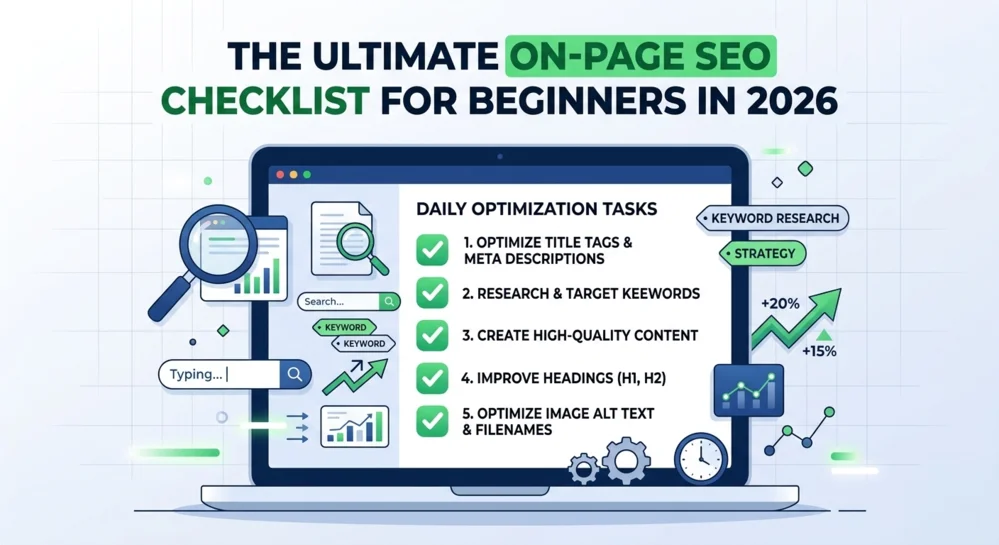
The Ultimate On-Page SEO Checklist for Beginners in 2026
Simple. Clear. Direct. Meta descriptions matter too, even though many beginners ignore them. They help improve click-through rates because users read them before deciding which result to open.
Tiny details like this may seem small individually, but together they improve overall SEO performance.
Use Headings That Feel Organized
One thing search engines love is structure. And honestly, users love it too. Nobody wants to read one giant wall of text with no breaks. Your page should ideally include:
- one H1 heading
- multiple H2 headings
- supporting H3 headings where necessary
This helps search engines understand the hierarchy of your content. But more importantly, it helps readers scan information faster. That is why proper headings remain one of the easiest yet most effective on-page SEO techniques beginners can implement immediately.
On-Page SEO Techniques That Actually Make a Difference
There are hundreds of SEO tips online. Some are useful. Some outdated. Some honestly just noise. But a few strategies consistently matter because they improve both rankings and user experience together.

Write Helpful Content First
This sounds basic, but it is still the most important part. Google now prioritizes content that demonstrates:
- expertise
- experience
- trustworthiness
- relevance
In other words, shallow content does not perform well anymore. If your article only repeats information already available everywhere else, rankings become difficult.
Good content answers questions properly. It explains things clearly. It feels written by someone who actually understands the topic.
That is why many experienced agencies, including AdliveTech, focus heavily on content quality and user intent rather than outdated keyword-heavy tactics. Because honestly, search engines have evolved a lot.
Improve Internal Linking
Internal links are underrated. Most beginners publish articles and never connect them properly with related pages. That creates isolated content which search engines struggle to understand contextually.
Internal linking helps:
- distribute authority across pages
- improve navigation
- increase engagement time
- help Google crawl pages better
For example, if you write about technical SEO later, linking it back to your beginner SEO guide creates stronger topical relevance. It sounds small but it matters more than people think.
Optimize Images and Speed
People love visual content, but oversized images can slow your website down badly. And slow websites frustrate users fast.
To improve performance:
- compress images
- use descriptive filenames
- add alt text
- avoid unnecessarily large files
- use modern image formats
Page speed is now a direct ranking factor, especially on mobile devices. A slow site usually means:
- higher bounce rates
- lower engagement
- weaker rankings
So yes, image optimization absolutely matters.
Importance of SEO for Long-Term Business Growth
The importance of SEO keeps growing because online competition grows every single year. Businesses that ignore SEO eventually struggle with visibility, even when their products or services are genuinely good. Instead of depending fully on paid advertisements, SEO helps businesses build sustainable, long-term traffic that compounds over time.
SEO Builds Trust Slowly But Powerfully
People naturally trust websites they see repeatedly on Google. It creates familiarity. Over time, strong rankings help position your business as reliable, established, knowledgeable, and trustworthy. This matters especially for new brands trying to compete in crowded industries. Trust builds gradually when your content consistently solves real problems for users.
Mobile Optimization Is No Longer Optional
Most searches now happen on smartphones. If your website looks broken or slow on mobile, your rankings will suffer. A good mobile experience includes fast loading speed, readable fonts, simple navigation, responsive design, and easy-to-click buttons. Google uses mobile-first indexing, meaning mobile performance directly impacts your SEO visibility, something many beginners still underestimate.
SEO Gives Long-Term ROI
This is one of the biggest reasons businesses keep investing in SEO. Unlike paid advertising that stops the moment your budget runs out, SEO keeps working over time. Once your pages rank, traffic becomes more consistent, lead generation improves, customer acquisition costs decrease, and brand visibility grows steadily. That long-term consistency is one of the strongest SEO benefits for new businesses looking to grow sustainably without burning through ad spend.
Common On-Page SEO Mistakes Beginners Still Make
Most on-page SEO mistakes happen because beginners focus on shortcuts instead of fundamentals. Some of the most common include:
- copying content from competitors
- ignoring mobile optimization completely
- publishing thin articles with no real value
- using poor or missing heading structure
- forgetting internal links between related pages
- neglecting page speed and core web vitals
Modern SEO rewards quality and usability far more than tricks. Focus on creating genuinely helpful content, structuring it clearly, and optimizing every page properly. That is where the real importance of SEO lies, and why it remains one of the most valuable long-term investments, especially as a core SEO benefit for new businesses building their digital presence from the ground up.
Final Thoughts
Learning On-Page SEO can feel overwhelming at first, especially with how much conflicting advice exists online. But once you focus on the fundamentals, things start making more sense.
A strong beginner SEO checklist, combined with practical on-page SEO techniques, can gradually improve rankings, traffic, and overall website performance without needing complicated strategies.
The real importance of SEO is not just about ranking higher. It is about helping the right people discover your content at the right time.
And for growing brands, the long-term SEO benefits for new businesses are honestly hard to ignore. Better visibility, stronger credibility, consistent traffic, and lower dependency on paid ads, all of that adds up over time. Start small. Optimize consistently. Focus on users first. That is usually where the best SEO results come from anyway.
Frequently Asked Questions
What is On-Page SEO?
On-Page SEO refers to optimizing individual pages on your website to improve search rankings and user experience. This includes content, keywords, headings, page speed, images, and internal linking.
Why is SEO important for beginners?
SEO helps beginners improve online visibility and attract organic traffic without relying entirely on paid ads. It also helps build trust and long-term website growth.
Which on-page SEO techniques work best in 2026?
Some of the most effective on-page SEO techniques include keyword optimization, mobile-friendly design, fast-loading pages, quality content, internal linking, and proper heading structure.
How long does SEO take to show results?
SEO usually takes a few weeks to several months depending on competition, content quality, and consistency. It is more of a long-term strategy than a quick fix.
What are the SEO benefits for new businesses?
The biggest SEO benefits for new businesses include better online visibility, steady organic traffic, stronger credibility, lower advertising costs, and long-term digital growth.