

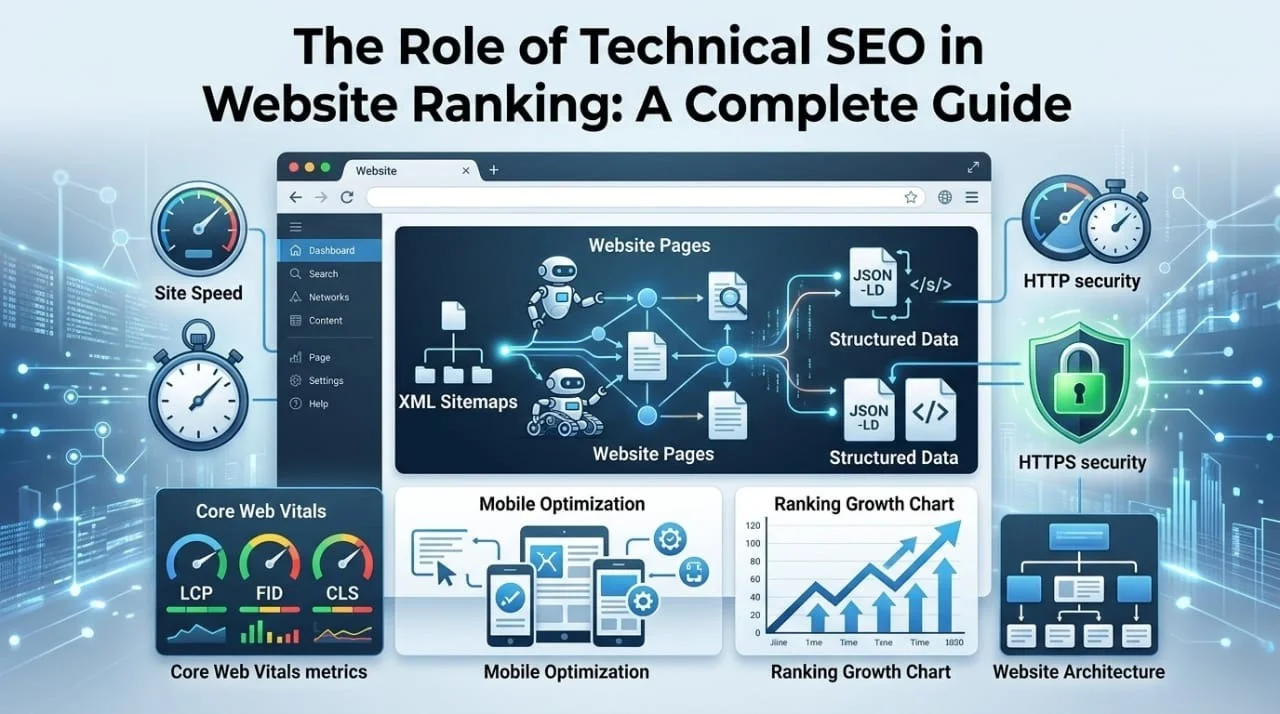
Technical SEO is the foundation that helps search engines discover, crawl, understand, and index your website efficiently. While content and backlinks remain important, technical SEO ensures that your website can actually be accessed and evaluated by search engines. Without a strong technical foundation, even the best content may struggle to achieve strong search engine rankings.
If you’re investing in content creation, website design, or digital marketing, technical SEO helps make sure those efforts have a chance to succeed. Search engines need to access, understand, and trust your website before they can rank it for relevant searches. When technical issues get in the way, rankings often suffer regardless of how valuable your content may be.
As search algorithms become more sophisticated, technical SEO for websites continues to play an important role in visibility, organic traffic, and user experience. Understanding how it works can help you make smarter decisions that support long-term growth.
What Is Technical SEO and Why Does It Matter?
Technical SEO refers to the process of optimizing a website’s infrastructure so that search engines can crawl, index, and rank its pages effectively. It focuses on elements such as site speed, mobile usability, website architecture, security, structured data, and crawlability.
Unlike content optimization, technical SEO works behind the scenes. Search engines rely on technical signals to determine whether a website provides a smooth and accessible experience for users. If search engines encounter difficulties accessing your pages, your content may never reach its ranking potential.
Many website owners focus heavily on publishing content and building backlinks. Those activities are important, but they cannot fully compensate for technical problems. A website with slow loading pages, indexing issues, or poor site structure creates unnecessary barriers for both users and search engines.
Technical SEO matters because it provides the foundation on which every other SEO activity depends. Without that foundation, even a well-planned SEO strategy can struggle to produce consistent results.
How Technical SEO Influences Website Ranking?
Technical SEO directly impacts website ranking because search engines use technical signals to evaluate website quality and usability. Websites that load quickly, function properly on mobile devices, and provide clear navigation often perform better in search results.
Search engines aim to deliver the best possible experience to users. When a website is technically sound, search engines can crawl and understand its content without obstacles. This improves the likelihood of pages being indexed and displayed for relevant searches.
Technical SEO also supports other SEO efforts. Even strong content and backlink strategies can be limited if technical issues prevent search engines from accessing important pages.
Consider two websites targeting the same keyword. If one website loads faster, has a cleaner structure, and offers a better user experience, search engines are more likely to view it favorably. Technical optimization helps remove friction, making it easier for search engines to interpret and rank your content.
Google Ranking Factors Related to Technical SEO
Several Google ranking factors are closely connected to technical SEO. These factors help search engines assess both website quality and user experience.
Some of the most important factors include:
- Website speed and performance
- Mobile responsiveness
- HTTPS security
- Core Web Vitals
- Website crawlability
- Website indexability
- Structured data implementation
- Internal linking structure
- Clean website architecture
Google continues to refine its algorithms, but these technical factors remain important because they directly influence how users interact with websites. A technically optimized website generally offers a better experience, which aligns with Google’s goal of delivering relevant and useful search results.
While technical SEO alone won’t guarantee top rankings, it helps create the conditions necessary for strong SEO performance.
Why Website Crawlability and Website Indexability Are Essential?
Website crawlability refers to a search engine’s ability to access and navigate pages on your website. Website indexability refers to whether those pages can be stored in a search engine’s index and appear in search results.
If search engines cannot crawl your website efficiently, they may miss important content. Similarly, pages that cannot be indexed will not rank regardless of their quality.
Many businesses discover during a technical SEO audit that valuable pages are either blocked from crawling or excluded from indexing. In some situations, months of content creation generate little organic traffic simply because search engines are unable to access the content correctly.
XML Sitemaps
XML sitemaps help search engines discover important pages quickly. They act as a roadmap that guides crawlers through your website.
For large websites, sitemaps become especially valuable because they help search engines locate pages that may not be easily discovered through internal links alone.
Robots.txt Configuration
A properly configured robots.txt file ensures that search engines can access valuable pages while avoiding unnecessary areas of the site.
Even a small configuration mistake can unintentionally block important sections of your website from search engines.
Internal Linking
Internal links help search engines understand page relationships and distribute authority throughout the website.
They also improve navigation for users by helping them discover related content naturally.
Canonical Tags
Canonical tags prevent duplicate content issues by identifying the preferred version of a page.
Without proper canonicalization, search engines may struggle to determine which page should rank, potentially weakening overall visibility.
Maintaining strong website crawlability and website indexability helps search engines understand your content and improves your opportunities to achieve higher search engine rankings.
Core Web Vitals and Their Impact on Search Engine Rankings
Core Web Vitals are a set of user experience metrics that measure loading performance, interactivity, and visual stability. They are an important part of Google’s page experience evaluation.
Core Web Vitals focus on three primary measurements:
- Largest Contentful Paint (LCP)
- Interaction to Next Paint (INP)
- Cumulative Layout Shift (CLS)
These metrics help determine whether users can interact with a website quickly and comfortably. Websites that provide a better user experience often have stronger engagement metrics, which can contribute positively to search engine rankings.
Think about how frustrating it is when a page loads slowly or when buttons move unexpectedly while you’re trying to click them. These experiences create friction and can cause users to leave. Google’s focus on Core Web Vitals reflects the importance of providing a smooth, reliable browsing experience.
Improving Core Web Vitals often involves optimizing images, reducing unnecessary code, improving server response times, and minimizing layout shifts.
Why Website Speed Optimization Matters for Technical SEO?
Website speed optimization is one of the most important aspects of technical SEO because slow websites create poor user experiences and can negatively affect rankings.
Research consistently shows that users are more likely to leave websites that take too long to load. Every additional second of delay increases the likelihood of visitors abandoning the page before engaging with the content.
Website speed optimization is not just about rankings. Faster websites often experience better engagement, stronger conversion rates, and improved user satisfaction.
Effective website speed optimization strategies include:
- Compressing images
- Using modern image formats
- Enabling browser caching
- Reducing JavaScript and CSS files
- Utilizing content delivery networks (CDNs)
- Improving hosting performance
Many websites achieve noticeable performance gains through relatively simple improvements. Small changes can add up and create a significantly better experience for users.

Technical SEO Best Practices for Modern Websites
Technical SEO best practices help ensure that websites remain accessible, secure, and easy for search engines to understand.
Use HTTPS Security
HTTPS protects user data and signals trustworthiness. Google has long encouraged websites to use secure connections.
Visitors are generally more comfortable interacting with websites that display security indicators, particularly when submitting forms or making purchases.
Optimize for Mobile Devices
Mobile-first indexing means Google primarily evaluates the mobile version of a website. Responsive design is essential for modern SEO success.
With mobile traffic accounting for a significant share of internet usage, mobile optimization is no longer optional.
Implement Structured Data
Structured data helps search engines understand content more clearly. It can also improve search visibility through enhanced search results.
By providing additional context, structured data can help search engines display information more effectively.
Improve Website Architecture
A clear website structure helps users and search engines navigate content efficiently.
Simple navigation, logical content organization, and well-planned internal linking contribute to a stronger website experience.
Fix Broken Links
Broken links create poor user experiences and waste crawl resources. Regular audits help identify and resolve these issues.
Businesses that prioritize these technical SEO best practices are often better positioned to maintain stable search visibility over time.
As part of broader website optimization projects, teams at AdLiveTech regularly address technical factors such as site structure, performance, mobile usability, and crawl efficiency because these elements influence how effectively search engines evaluate a website.
How to Conduct a Technical SEO Audit?
A technical SEO audit helps identify issues that may be limiting search performance. Regular audits ensure that websites remain optimized as search engine requirements evolve.
A comprehensive technical SEO audit should include:
- Crawl error analysis
- Indexing status review
- XML sitemap validation
- Robots.txt inspection
- Core Web Vitals assessment
- Mobile usability testing
- HTTPS verification
- Structured data testing
- Redirect analysis
- Internal linking evaluation
A technical SEO audit should not be treated as a one-time task. Websites constantly change as new pages are added, designs are updated, and technologies evolve. Issues that were not present six months ago may emerge today.
Tools such as Google Search Console can help identify technical issues and monitor website health over time. Regular reviews help ensure that small problems do not develop into larger obstacles that affect website ranking.
How an On-Page SEO Checklist Complements Technical SEO?
An On-Page SEO Checklist works alongside technical SEO to maximize search performance. While technical SEO focuses on infrastructure, on-page SEO focuses on content optimization.
A typical On-Page SEO Checklist includes:
- Keyword optimization
- Title tag optimization
- Meta description creation
- Header tag structure
- Internal linking
- Image optimization
- Content quality improvements
- URL optimization
Technical SEO ensures that pages can be crawled and indexed, while on-page SEO helps search engines understand the relevance of the content itself.
Neither approach works effectively in isolation. A technically optimized website still requires relevant, valuable content, while strong content benefits from a solid technical foundation. Together, they help improve visibility, user experience, and organic performance.
Common Technical SEO Issues That Affect Website Ranking
Many websites experience technical issues that limit their search performance. Identifying and fixing these problems can lead to significant improvements in visibility.
Common issues include:
- Slow page loading speeds
- Broken internal links
- Duplicate content
- Incorrect canonical tags
- Mobile usability problems
- Indexing errors
- Redirect chains
- Missing XML sitemaps
- Poor website architecture
- Unoptimized Core Web Vitals
These issues are often more common than website owners realize. Some may develop gradually over time due to website updates, migrations, or changes in content structure.
Regular monitoring helps identify and resolve problems before they begin affecting website ranking and user experience.
The Future of Technical SEO for Websites
Technical SEO for websites will continue evolving as search engines place greater emphasis on user experience, performance, and accessibility. Advances in artificial intelligence, mobile technology, and search behavior will make technical optimization increasingly important.
Although search engines are becoming more sophisticated, they still depend on technical signals to access and understand content effectively. Websites that remain fast, secure, and easy to navigate will continue to have an advantage.
Rather than chasing every algorithm update, focusing on technical fundamentals often provides more sustainable long-term results.
Conclusion
Technical SEO plays a crucial role in website ranking because it enables search engines to crawl, index, and understand website content effectively. Factors such as website crawlability, website indexability, Core Web Vitals, website speed optimization, and overall technical performance directly influence search engine rankings.
If you want long-term SEO success, technical SEO cannot be ignored. Content marketing, link building, and keyword optimization are valuable, but their impact is often reduced when technical issues prevent search engines from accessing or understanding your website properly.
By following technical SEO best practices, conducting regular technical SEO audits, and combining these efforts with a comprehensive On-Page SEO Checklist, you can build a stronger foundation for organic growth, improved visibility, and a better user experience. As search continues to evolve, websites with strong technical foundations will remain better equipped to compete for valuable search engine rankings.
Frequently Asked Questions
What is technical SEO?
Technical SEO focuses on optimizing a website’s infrastructure to help search engines crawl, index, and rank pages efficiently.
How does technical SEO improve website ranking?
Technical SEO improves website ranking by enhancing crawlability, indexability, site speed, user experience, and overall website performance.
Why are Core Web Vitals important for SEO?
Core Web Vitals measure user experience factors such as loading speed, responsiveness, and visual stability, all of which contribute to search engine rankings.
How often should a technical SEO audit be performed?
Most websites should perform a technical SEO audit at least once every quarter, while larger websites may benefit from monthly reviews.
Is technical SEO more important than on-page SEO?
Both are essential. Technical SEO ensures search engines can access and understand content, while on-page SEO helps demonstrate content relevance for specific search queries.